June 24, 2009

Surprise: Daughter's health insurance story up on barackobama.com

New Update: July 1 The story is back on the Obama site. Turns out it was missing from Saturday until 5 pm Wednesday. We don't know why.
health care day logokatie headshot
My daughter is full of surprises. But thanks to six months of chemo and surgery, my 25-year-old is no longer carrying cancer within. The upcoming 30 radiation treatments, eight more months of Herceptin and five years of daily Tamoxifen will try to maintain that status.

This week's surprise was learning she's been a long-time member of BarackObama.com and that she submitted her health care story.

She just learned her story is posted. She's sharing the link with many in hopes that folks will agree it is a tale hearthisdeserving to be heard and that change happens. (Please click on the icon at the end of her story if you agree after reading it.)

Learning her doctor was wrong - 24-year-olds can get breast cancer was a surprise. There was more. She writes:
"It's devastating to get the news of a disease or accident but even worse to get the bills in the mail and not being able to pay for them because of the disease.
Insurance surprises

She was surprised when she learned that having health insurance isn't always a good thing. That's why she faces a debt of more then $25,000 acquired unknowingly the first month after her diagnosis. It could have been more. And it will grow.

She was surprised to learn that having breast cancer means she'll probably always need to pay more for insurance. But the $580 monthly bill right now is worth every penny when you face treatments that cost three times that without insurance.

She was surprised to learn long-term disability insurance would not pay until after the first 12 weeks. That's the length of time allowed under the Family Medical Leave Act at which time you can choose to come back to work or end employment. Not that she opted to buy long-term disability insurance. What fresh-out-of-college graduate sees that as a need.

A mother's heart

My heart shattered the day I learned she had breast cancer.

My heart hurt when the treatment centers of her choice rejected her because of her insurance.

My heart ached when she learned that preapproval of a test or procedure does not mean the insurance company will pay for it.

The truth about healing

Some say time heals the heart. One of my daughter's favorite quotes (from Dr. Phil) corrects that thought.

"Time heals nothing. It is what you do with that time that matters."

My heart swells with pride as I watch her jump in to help otherbelieves with cancer by answering questions on the online cancer board.

My heart mends quietly as I watch her pound out an email to The Doctors after hearing one tell a woman in her 20s not to worry that a breast lump is cancerous.

My heart beats stronger watching my daughter choose advocacy and leadership instead of wallowing in pity.

I am not surprised that my 25-year-old uses her strengths and knowledge to discover, connect and take action.

Please read her story, click on the "people should hear this" button at the end of her tale. Send her a message on Facebook or myspace or here.

We should not need to choose poverty or life. She says:

"It's not someone's fault for an accident or getting cancer ... please work towards coverage for all."

P.S. When my daughter first shared the link with me, she reminded that it was written while she had "chemo brain." Be gentle.


I've written about Katherine's cancer battle before:
October 2008
November 2008

December 2008


January 2009


February 2009
March 2009


April 2009


May 2009
June 2009

June 23, 2009

Cleveland newspaper workers get pay cut, furloughs - Business | DailyAdvance.com

Union workers at the Cleveland Plain Dealer approved pay cuts and furloughs

The PD is under the Advance Publications umbrella.

Plain Dealer redesigns

The editor of The Cleveland Plain Dealer walks through the new lineup and redesign.

The post included links to before and after pages.

Susan Goldberg told readers to look for more soundbites, an attempt to cover all bases.

Changes include:
  • Expansion of news highlight rail on the front page. The rail, which provides summaries of major national and international news, as well as headlines from the Metro, Business, Sports and features sections. See front page design in this before-and-after PDF.)
  • New headline structure.
  • Saturday business section focuses on issues that affecting pocketbook.
  • Expanded arts section on Sundays, including Close Up, where critics will annotate an artwork or term of art; Rediscoveries, look back at books, albums or films you may have missed; Tastemakers, up-and-coming Clevelanders talk about how they hope to shape the city; and Pop Ten, humor mixed with reminders of what's happening.
  • New weather box on page one.

The Plain Dealer remains relevant and resolute: Publisher Terrance C.Z. Egger - Metro - cleveland.com

The publisher of The Cleveland Plain Dealer explains the newspaper is relevant and resolute.

The publisher had shared the challenges a year earlier and returned to say people are reading the news on paper and online - 86% daily!

Some of the facts from Terrance Egger:
More than 1.3 million people in Greater Cleveland get their news and advertising information from The Plain Dealer and our online affiliate, cleveland.com, each week. That means The Plain Dealer remains, by far, the No. 1 source of news and information in Ohio.

The Plain Dealer has the highest daily circulation percentage of the 20 largest newspapers in the country and the second-highest on Sunday -- reaching nearly half of all area households on that day.

Eighty-six percent of all adults over 18 in the Cleveland-Akron area read a daily newspaper in its print or online edition each week. That's the highest percentage of any major market.
Citing the 750 articles and 20 videos produced weekly, the publisher says a good job is being done. In return, he promised:
  • We will serve you with a seven-day-a-week newspaper, delivered to your home
  • We will grow our online audience and abilities.
  • We will be a watchdog for our community.
  • We will give strong support to our local businesses, linking to current advertising options.
Big promises in light of declining advertising nationwide, promises that drew 48 comments quickly.

June 22, 2009

New editor named for Grand Rapids Press, Muskegon Chronicle

It's official. Paul M. Keep is heading to his fifth Booth Newspaper by becoming editor of the largest Newhouse newspaper in Michigan.

Keep, 51, will replace Mike Lloyd in the Grand Rapids Press newsroom on July 1. It's his fourth time as editor at a Michigan Advance Publications newspaper - The Bay City Times, 1993-99; The Flint Journal, 1999-2006; and The Musekgon Chronicle, 2006-2009.

The father of three became publisher of the Muskegon newspaper in April 2007 (and continued writing a column regularly on newspaper operations, including With this new year comes a new Chronicle and Carpal tunnel aside, online chat was a great way to connect and We listened to you and we're making some changes.)

He also was a reporter, business editor, and assistant metro editor at the Kalamazoo Gazette. A Muskegon Chronicle article on his rise to publisher says he was news editor in Muskegon 1989-1993.

Combined operations

The Muskegon Chronicle and Grand Rapids Press are printed in the same facility, a move announced in August 2008. The Press had taken over the Chronicles accounting and human resources operations earlier.

(One comment on an announcement on mlive.com suggested the next move is for the Chronicle to become the lakeside edition of the Grand Rapids Press. Are rumors of our demise still wrong?)

Keep is being replaced by two people - a general manager and an editor- at the Muskegon Chronicle. Cindy Fairfield, the local news editor, will become editor, responsible for all editorial operations. Steve Westphal, now general manager at the Grand Rapids Press, will add the same duties for the Muskegon Chronicle. The 54-year-old is in charge of all operations.

Westphal's past

The Muskegon Chronicle said:
"He formerly was The Press' director of advertising and marketing and prior to moving to West Michigan in 1996, he held management positions at newspapers in Spokane, Wash., Dubuque, Iowa, and Gary, Ind. He and his wife, Rebecca, live in Fruitport Township."
Westphal's LinkedIn profile says he was advertising manager at the Spokesman Review and Dubuque Telegraph Herald. (He's also on Facebook.)

Sports to projects to ...

Cindy Fairfield became local news editor on Feb.. 2, 2009, responsible for all newsroom operations. The 48-year-old had been the daily newspaper's project editor since March 2007 and the sports editor for 17 years. She worked at the Kileen Daily Herald in Texas, but has been at the Chronicle since 1985.

Like Paul Keep, she graduated from Miami University in Oxford, Ohio.

The Chronicle won top awards in newswriting and photography in the most recent Michigan Assoicated Press Editorial Association contest. Among the winning entries was a yearlong
Working Poor series.

Another column writer

Like Paul Keep, Cindy Fairfield has several columns posted on mlive.com, the online home of the Muskegon Chronicle, including:
She's been married nearly 25 years to football coach Dusty Fairfield, getting hitched just eight days after the decision to wed. They have three adult daughters - one who is getting married in the family back yard - a self-described hobby farm in Ravenna - in July. She graduated from Lebanon (Ohio) High School in 1979 and also has a vacation place in southeastern Kentucky.

For awhile at The Flint Journal, I reported directly to Paul Keep We spent lots of mornings talking about the future of newspapers, the Internet and our online affiliate, mlive.com.

The Journal also was the Newspaper of the Year in the AP Editorial Contest while he was in Flint.


Only two editors the same

The latest moves leave only the editors at the Jackson Citizen Patriot and Kalamazoo Gazette the same this year in the Michigan Advance Publications newspapers.

Remember, it started with Tony Dearing slipping out the door for a special project with Advance Internet, which we now know is AnnArbor.com. The the editor of the Ann Arbor News announced his retirement just before we learned the newspaper was closing July 23. The Bay City Times, Saginaw News and Flint Journal combined operations under one executive editor (John Hiner, who had been editor in Bay City). The Saginaw News and Flint Journal editors are leaving to pursue other opportunities. A community editor is now the top editor in the three newspapers, all reporting to Hiner.

Or should we start speculating about Paul moving to Cleveland, where he was born, to take over the Cleveland Press? (Articles about Paul always note he was raised in Kalamazoo.)

I've written about Paul Keep before:
I've written about Mike Lloyd, who started as editor at the Press in 1978, before:

I've written about the Grand Rapids Press before:
and that's enough for now. What do you know?

June 19, 2009

Discovered: Worthless 'ornament'

Did you know you can suggest new old items for the Facebook application Worthless gifts for print news veterans on the fan page?

A comment from Kevin James of Oklahoma City, OK, that he uses the :CueCat, that cat-shaped object that read a barcode and sent you to a web site in the late 1990s, as a Christmas ornament gave us another gift in the application.

At one time, I had two CueCats - one sent to me as a Wired magazine subscriber and another picked up at work as part of a Parade magazine promotion. (Wired, Parade and my work place, the Flint Journal, are all part of Advance Publications. ) You also could get a free :CueCat at a RadioShack.

The idea was that the :CueCat would translate barcodes in articles or ads to web site links so that the user didn't have to write down a web address.

The :cueCat failed, which is probably why there were about 50 like-new ones available on Ebay Thursday, many with a buy-it-now price of $8.99.

Unfortunately, I remember that :cueCat failure everytime I read something about QR codes, the two-dimensional bar codes.

By the way, you will find a shoutout on the fan page to my earlier post that mentions the Facebook application.

Your newsroom is in trouble if ....

Ask the Recruiter Joe Grimm, off on his own site, can't resist finishing that sentence.

Can you?

Here's one that Joe shares:

"Copy editors must turn in the stubs of their old pencils to get new ones."
Head to his Jobs Page, read a few and leave your own:

(I wrote about Joe before, in Skill with language sets tone for Grimm speech and in Beyond the Buyout, Beyond the Bylines for Journalists and ONA08 job fair was fun.

I was wrong

The Daily Derelict did not shout when it caught me in an embarrassing moment.. Seems I gave the wrong publication name for the Sun setting? Sun Newspapers Turn To Readers For 'Nifty' Content? post in the 'Nifty content' not enough post.

Yes, it was on the archive page of The Cleveland Free Press but I missed the large type in the header that said the newspaper merged in July 2008 with the Cleveland Scene. The article on the Sun Newspapers in the Cleveland area appeared in The Cleveland Scene.

The writer was unavailable for comment - the return email said he was on vacation.

The Derelict writes about politics, sports and idiocy. Newspapers, journalists and journalism slip into the blog with posts like Flint Journal readers discover their friends dead and Journalists get laid (off).

I regret the error and for my penance will read I Regret the Error
including John E. McIntrye's new contributions, and wait patiently without nagging for details about MediaBugs, which just got a Knight Foundation grant to treat journalism errors like software errors.

June 18, 2009

'Nifty content' not enough so Advance Publications closing weekly newspapers in Ohio

Getting the neighborhood to pitch in its news may not have helped a chain of weeklies in Ohio as much as hoped.

In December, a published letter from the editor invited more reader participation of the Sun Newspapers, which now publishes 22 weekly publications serving 72 Cleveland area communities on Thursdays.
"We want - more than anything - for you to feel that this is your paper. You will drive the direction, and we're counting on you to help us make big strides toward becoming a more localized paper.

"Has your local Cub Scout troop received accolades for a nifty service project? Let us know, and send us some pictures. Have you or a family member received an award or promotion? We want to know about that as well. Do you have a new baby in the family?" :
In January, the Advance Publication's weekly chain's three satellite offices were to centralize editorial operations in one office.

In early June, the reorganization and slashing of newspapers moved south from Michigan into Ohio. Sun Newspapers will publish under 11 mastheads when the reorganization plan is complete, according to a post on cleveland.com

The June 11 announcement had some talking on Twitter:

  1. Tim McKenna
    ItsThePlumber @j_conner Wondering if the plain dealer is trying to cut out some competition and keep the PD afloat?
  2. Jessica Conner
    j_conner @ItsThePlumber I think it has more to do with Advance Publications, who owns both & that the Sun readership in some comm is really lacking.
-- this quote was brought to you by quoteurl

The Cleveland Plain Dealer will handle Sun's accounting, payroll and retail sales departments and all home delivery, the announcement said. It already was handling some production and art work, according to the Cleveland Free Press.

The newspaper chain's editorial staff also will be reduced, according to the announcement. No details on the numbers were available.

The blog post says President and Chief Executive Officer Keith Mathis plans to complete the reorganization within 60 days. One commenter on the post suggests how he can do that.


The Cleveland Scene had predicted doom for the weekly newspapers in a January post Sun setting? Sun Newspapers Turn To Readers For 'nifty' Content? after the editor's invitation to readers to submit their news. (In the original post, I said the The Cleveland Free Press because that's the site I found Sun setting? Sun Newspapers Turn To Readers For 'nifty' Content? The Daily Derelict pointed out that newspaper closed.)

"Isn't turning over the front page to community newsletters like getting rid of Brady Quinn - because, you know, the guy makes a lot of money and times are tough - and replacing him with a guy from your softball team who can throw a nice spiral?"

The Cleveland Scene expressed concern about changes already implemented:

"The Sun papers were once autonomous and formidable. In recent years, overlapping content has increased, and many papers now share features. Their front pages still run hard news, but now alongside easy-to-generate items like Person of the Week - a glowing profile, complete with a grinning picture, of a local scout leader, outstanding student or swell parent."

The Scene also said:

"In recent months, Sun brass have preached a mission of making the papers "hyperlocal" to cover issues and events on a small scale. If the December 25 Suns are any indication, they're looking for cheap, easy and non-controversial filler about hot issues like a high-school Renaissance Christmas Madrigal Dinner and a local deer's struggle to remove a plastic jar from its snout."

It ended its post with an explanation of why small communities need watching and this:

"In the push for cheap content, the Sun editorial shot-callers could be filling their papers with news that's not worth paying for. It seems like a cost-saving measure that could cost the papers everything."

In Michigan, Advance Publications will eliminate its daily Ann Arbor News in July. It already reduced the printing of the Flint Journal, Bay City Times and Saginaw News to three days a week. Those three newspapers are sharing an increased amount of articles and photos. The Flint Township News, a weekly newspaper, was eliminated in June.


Related update:


Muskegon Chronicle's Paul Keep is not the only publisher with good news. Derek Dunn-Rankin of the Charlotte Sun answers his own question - Do we have a future - with a loud yes.

Other posts about the Cleveland Plain Dealer:


I've written about the Cleveland newspaper before.

June 17, 2009

Michigan student newspaper to try less print as journalism degree debate continues

It comes as no surprise that a Michigan college newspaper will copy its real-world counterparts and print less on paper and more online. I am more surprised that DigiDave entered the Is a J-degree necessary debate.

The River County Journal, an online site for southwestern Michigan, reported that the student-led newspaper at Western Michigan University will now print on Mondays and Thursdays instead of Mondays through Thursdays.

Make it real

The Journal quotes General Manager (and former Flint Journal copy editor) Brian Abbott as saying:
"It will continue its presence on the Web as a 24/7 news source and develop its video sharing, audio podcasts, photo slide show and interactive Web entity.

“We’re here to prepare students for a job, and readers are going to the Web more and more. Newspapers are looking for students who have these skills. We need to be focusing on that and giving them that hands-on experience.”
You can also read what the newspaper's editor wrote about the change or review the official press release.

Ex-chamber CEO heads online-only site

The River Journal, by the way, is an online-only publication with a focus on St. Joseph County, Michigan - River Country run by Bruce Snook, editor and publisher. Snook, who has written a column for the Kalamazoo Gazette, wants to "create a resource for “Celebrating and nurturing life in Southwest Michigan’s River Country.” Archives date back to April 2008 and include podcasts.

The Western Michigan University graduate retired as president and CEO of the Three Rivers Area Chamber of Commerce. Heworked for the chamber May 1992 — December 2007, according to his LinkedIn page.

digidave blog signature iconShould you go to journalism school?

Now back to DigiDave and the j-school debate. David Cohn, who had a double major of philosophy and rhetoric for his first degree, used internships to get his start in journalism. But he left an Wired to get his master's degree, part of a calculated move to become more then Dave the intern.

Regrets? He has a few.

Suggestions? He has a few, including how does someone learn entrepreneurship. See that might be just as important as traditional journalim skills, he says.

Go to j-school? Well ....
and you know what? I agree with his conclusion. Be sure to read the comments, where he answers my question about a journalism bachelor's degree.


Possibly related posts:

What do you think?
Would you suggest someone go get a journalism degree today?

June 16, 2009

Something special: Looking back at newspaper careers

This was a weekend that had three former reporters looking at their careers while Twitter exploded with moans about mass media failures.

That explosion prompted Louis Gray, who blogs mostly about technology and social media but obviously cares about journalism, to ask his audience if it wants old media to die or thrive.

The former newspaper addict wants to know if the harsh criticism of CNN and mass media is to show how bad it is or "we want to bash the old media when we don’t need them, but flock to them when we do."

Check the conversation on his blog post. for the answers. As Gray says, some folks seem eager to attack all that is wrong with mass media and not pay for any services but then "we hold them accountable for not being there, first to respond" when a real newsworthy event happens.
"Journalism is not a charity event. Its reporters cost money, as do papers and stations’ branch offices, travel expenses, and equipment, yet many of us on the bleeding edge are all too excited to mention how we’re not paying them a dime."
But I don't want to talk about dimes today. I need something lighter to balance my real life.

Journalism privileges

There are a lot of great things about being a journalist, special privileges even.

As Grand Rapids Press Editor Mike Lloyd creeps closer to retiring, he is sharing photos and stories of visits with presidents and presidential wanna-bes. It is part of his series updating stories from his career at the Grand Rapids Press.

A note from a reader led him to update what happened 13 years after a career day visit. The once curious student is still curious, now at Newsday.

Another graduation gave him a reason to remember the class of 1986 and one "superstar." In fact, the annual 100 Superstars feature is what Lloyd calls a highlight of his career. It features outstanding seniors, positive news stories.

Some in the community, like George Woons, agree that Lloyd's project was a good one. Woons was at the meeting when the name of "Superstar Seniors" was proposed for the section. Lloyd writes that Woons said:
"It was a great title that captured everything we were trying to do. You grabbed it and ran with it, and you're still running with it. Superstar Seniors is a heck of a gift to the community from The Press."
Making the right choice

Also looking back is a publisher who recalls days as young reporter and the idealism of the 1970s while reminiscing about "late baby boomers who cut our freak flags and went into business and the professions."

John Christie, now publisher of the Kennebec Journal and Morning Sentinel, concludes:
"And I'd like to think that putting out a newspaper is a good use of a lifetime, too."
I think Lloyd would agree. Just don't expect agreement from President Obama’s senior adviser David Axelrod, who spoke to 1,300 DePaul University College of Communications graduates over the weekend.

Journalism changes


Several news organizations reported that Axelrod left journalism to pursue a career backstage of politics because the field was becoming "more business than calling."

At first, I thought it mightbe a story about one more person who decided to take the high road and leave journalism because of business pressures.

But the more I looked into his background, I think it might be more that the politics of the newsroom became less inviting then the possibility of putting people into office. It doesn't take much research to learn that his interest in politics started when he was a kid.

Yes, you can


Certainly, Axelrod used his journalism experiences effectively in helping others get elected or get their messages out. That means he can serve as a model for transferring journalism skills to other fields to the many journalists out of the newsroom now.

Axelrod, who graduated from the University of Chicago, holds out hope that the graduates will change journalism and pursue with passion.
“Your generation changed politics forever. There’s no reason you can’t do the same wth journalism, radio and the Internet or any other field.”
Also from the Chicago Sun-Times, which reported that he shared stories about his days in college, is why he once wanted to be a journalist:
“In those days, superb reporting played a historic role in uncovering the truth, shining a bright light on events like Vietnam and Watergate. Journalists heped save the republic, and I wanted to be a part of that."
The Chicago Tribune hired him when he graduated with a degree in politics in 1977. Within a few years, he was able to combine two passions - journalism and politics - by becoming the newspaper's political writer.

Receipts, not reporting


The Sun-Times reported he told the graduates:
"But, over time, things changed. By the mid-1980s, journalism was becoming more business than calling. The front office began to take over the newsroom. The emphasis went from veracity to velocity, from reporting to receipts.”
So, in 1984 Axelrod left what was "more business than calling" to work on a political campaign. He moved on, eventually owning two consulting firms and building a successful career in politics behind the scenes. That career includes working on Detroit's Dennis Archer's campaign.

Perhaps what the students should remember is that when Axelrod collected degree in politics in 1977 he had no idea that one day he'd be advising the president of the United States. They can also review those 40 reasons why studying journalism is a good idea.

Even frogs can report

Do you need an uplift? Check out this article about the career path of reporter Kermit over on the Muppet Wiki.

Or perhaps you are ready to check out what Darlene Koenig , has been up to with Worthless Gifts for Print News Veterans on Facebook. Last I looked there were at least 72 items to send to friends. The owner of Koenig Educational Media keeps adding gifts to the application created in late March.

I especially like her names for objects - messy desks become "time-honored filing system" while a film cannister is "an all-purpose container." "Night shift wheel of death" is the vending machine and "old school filing center" is a pay phone.

On LinkedIn, she's described as an "award-winning writer and editor, combining a journalist's background with additional experience in children's media and education. Particular interests include government, political science, geography, literature and media literacy and their application to students in the real world."

I'd say she has a way with words and quite a memory.

Related posts:
Another editor leaving Booth

Facebook quiz leads to post-journalism jobs

Storyteller won't get regrets from me

Around the 'net:

Tired of my voice? Check A lost opportunity to talk to Grandmother

June 15, 2009

Updates on Advance Publication newspapers come with help from my friends

A travel-weary blogger sends traffic my way with this post: freefromeditors: Inside Out: Your source for Booth News today

The post includes background and an opinion on Paul Keep, who is mentioned in both the Tickling the funny bone post and Happy days in Muskegon. Free From Editors reminds us that Keep once was editor of The Flint Journal. The Muskegon and Flint newspapers are owned by the Newhouses through Advance Publications.

Twitter follower Todd Fettig thought my headline on the Happy days post was a bit too optimistic. He shared the link with this headline: Is there light at the end of the tunnel?

OK, as my grandfather would say - don't care what you call me as long as you're calling me to the table. I like readers so thanks, Todd.

Grand Rapids Press Page 1 June 14 2009Todd and I had a friendly Twitter chat this weekend about the Grand Rapids Press A1 Sunday. It helped me clarify that I believe local newspapers should focus on what's in their back yards.
  1. Todd Fettig
    toddfettig This story I'm editing says @johncmayer insists on five chocolate chips per cookie. That's front page material. (And I am not kidding.)
  2. M Chick Whiteside
    mcwflint @toddfettig your decision to make 5 chips per cookie front page news? Bump your head?
  3. Todd Fettig
    toddfettig @mcwflint Those aren't just any chocolate chips. Those are @johncmayer's chocolate chips. (And there's a strong Grand Rapids tie.)
  4. M Chick Whiteside
    mcwflint @toddfettig I get GR angle but cookie chip counts ain't A1 news anywhere. (But perhaps I should consider which editor is still working)
  5. Todd Fettig
    toddfettig @mcwflint Not sold on @johncmayer's chocolate chips? How about Neil Young's favorite salad? (The front page story will divulge even more.)
  6. M Chick Whiteside
    mcwflint @toddfettig Eating habits of musicians won't entice any eyeballs to a daily newspaper. Sounds like a retread. R all journalists on furlough?
  7. Todd Fettig
    toddfettig Rest assured, @mcwflint: @johncmayer's chocolate chip capacity is not the only A1 news. Also a Gitmo North story. http://tinyurl.com/nu2r6q
  8. M Chick Whiteside
    mcwflint @toddfettig Good story, but is it a Grand Rapids story? No. What's wrong with your backyard? Just saying ... If I were editor :)
  9. Todd Fettig
    toddfettig http://twitpic.com/7cwgf - Thanks for the lively exchange tonight, @mcwflint. Here's the front page in question, @johncmayer and all!
-- this quote was brought to you by quoteurl
After reading the story the chips tease referred too, I owe Todd an apology. The story was about a Grand Rapids man who now cooks for musicians, not about the quirky eating habits of folks like John Mayer. And Todd did try to tell me there was a Grand Rapids angle - I just assumed incorrectly that Mayer was playing in that city.

I am still not convinced that putting Guantanamo Bay detainees in an Upper Peninsula prison that is 200 miles away is a Grand Rapids story. Or perhaps it is part of the newspaper's strategy to position itself as the largest home-delivered daily newspaper in Michigan.

What do you think?

Tickling the funny bone: Staff cuts and the future of newspapers

Sometimes, the most political thing happening takes place in your newsroom. Just ask Dan Wasserman, who recently illustrated cuts at the Boston Globe in an editorial cartoon.

You can click on the cartoon to see the rest of this artwork.

Or you can catch up with some of the insights of why he drew it through an interview posted on the Washington Post. Don't worry, the cartoon is there too.

Making a mistake

The political cartoonist, at the Globe since 1985, also shared what he sees as a mistake many newspapers are making:
"Newspapers are really shortsighted in letting go of people who are distinct commentators. Because that's one of the few things [newspapers] have to offer that you can't get off of a CNN Web site or a Google news update. We have a connection to the community. We have accessibility. We have an unpredictability that is not reproducible by any of these news aggregators."
I agree that news organizations shouldn't let go of distinct voices. That's what makes a news organization different from others.

I agree with the unpredictability statement.

But I disagree with his reasoning that only newspapers have distinct personalities, community connections and accessibility. Any good media organization should claim those attributes.

Still the interview in The Comic Riff is worth a read. Then, consider going to Wasserman's Out of Line blog with its tagline of "A notebook of graphic disobedience" to see some of his other work.

Snip, snip, snip

Another cartoon also reminded me of a distinct advantage newspapers have over some media. That cartoon shows a woman speaking to her husband as she cuts out a newspaper. It's not easy to cut out the TV or radio story, so print does reign sometimes.

But I wonder if newspapers are leaving enough in for folks to cut out as they scramble to cut expenses. I miss reading about the top graduates, newly engaged and wed, and the just-opened businesses.

When William Haefeli published his cartoon in The New Yorker on May 11, 2009, the worry was how long the newspaper would be around to cut. But with enough cuts it won't matter, will it.

Another cartoonist, another viewpoint

clip of malard filmore cartoonWasserman isn't the only cartoonist talking about the future of newspapers. Bruce Tinsley, who left the newsroom to create Mallard Filmore, also touched on the subject in a Wall Street Journal article, Mallard cartoonist touts web, mourns newspapers.

He says he's doing well, partly because of the web.
“I’m online only for more newspapers’ websites and in more papers that only have an online presence now, the most recent being the Seattle Post-Intelligencer, and it’s weird — but I’m still here.”
He's somewhat optimistic about newspapers:
“I think newspapers are always going to be needed; I just don’t know in what form they’ll still exist.

“The best case for the need for newspapers in an electronic age that I’ve read is a Leonard Pitts column in the Miami Herald where he essentially lays out what each medium does best. He specifically points to state and local news coverage — stories that readers rely on to know how to vote, what to think about scandals in their local state house — that no other medium covers as well, and probably could or would want to.”
Tingley was in the Wall Street Journal and on the O'Reilly show last week because the comic was launched in June 1994. By the way, Michigan's Muskegon Chronicle's decision in April 2008 to drop the duck had editor Paul Keep tasting duck, not crow. That makes it into Tingley's Wikepedia entry.

Happy days here again in Muskegon - revenue, readership up

Publisher Paul Keep tells readers of the Muskegon Chronicle to cheer up as his newspaper can report signs of happiness, or at least signs that a rebound is starting.
"First, in the last few months we have seen some positive signs in our own revenue stream."
Plus, Keep reports readership is up.
"The most recent readership report from Scarborough (something like the Nielsen ratings for broadcast media) shows that combined daily and Sunday Chronicle readership rose 1.5 percent to 71.3 percent of the Muskegon County population at the end of the first three months of 2009.It was 69.8 percent in 2008."
He explains how the web figures in and more of the signs of the turnaround.

Perhaps that good news can spread to BoothMidMichigan and the east side of the state, which Keep discussed in an earlier column: "Newspaper's future in your hands."

June 12, 2009

Carrying a pen, notebook makes you stand out?

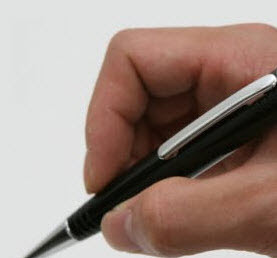
hand holding penI forget what got me to "the Media Equation - In Media Equation: In one city, two soirees ages apart. I know this paragraph by David Carr is what stopped me:
"I wandered the rest of the party and noticed people staring at me. Had I become the dad in the basement at the teenage party? No, as it turned out, it was the analog act of taking notes with a pen on a notebook that was freaking people out. I may as well have been prancing around with an abacus."
Hours earlier, a physical therapist also talked about the lost art of putting pen to paper. Actually, she was praising computers and keyboarding for developing strength in both arms and hands as opposed to the stronger, bigger arm/hand once developed with old-fashioned writing.

I own a nice collection of computers, including the iPhone that fits so nicely in a pocket. But I still like a good pen to use on a notebook.

Vital signs: Notebook and pen


I take a notebook and pen to every doctor's visit to jot down what is said even if I don't understand at the time. Later, something I scribbled then becomes clear as I learn more about the health issue that prompted the doctor's visit. It may just become more clear as I translate the scribbling into a document on a computer.

(Yeah, I have bad writing that combined with my version of shorthand makes it impossible for others to read. It can make it hard for me to read if I wait too long to translate the scribbles.)

I still take notebook and pen to conferences and symposiums, even those that boast of wireless connections. It's the fear of a dead connection leaving me powerless to recall later what was said. It's my backup.

In search of silence, freedom

The pen and notebook is quieter too. The sounds of keys sometimes disturbs the thoughts generated by the speaker up front.

The pen and notebook also let me wander in a way typing on a computer never does. I can scratch out what the speaker says and then write a question or thought to explore later in a margin. I can quickly duplicate a sketch or draw a portrait of the speaker on my notebook.

Only the right one will do


And, what a difference the pen can make. I like the thicker ones - at least as big as my smallest finger. But I don't like pens pushed inside foam rubber tubes, the type I had to use when my fingers needed to relearn how to move correctly after a multiple sclerosis relapse froze my right side.

I learned the hard way that the the pens that leave lines similar to markers are not good to use in wet weather. Also, don't use the marker-type pens on clumsy days if you plan to drink coffee or water.

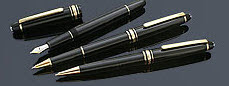
But, oh, the feeling of the pen with marker-like ink and nib flowing over the paper, pmontblanc penushing lines out of the brain and into a format others might recognize. It's the right pen for painting a greeting inside the card designed to remind someone they are remembered.

I miss my Montblanc pen, a gift, that was lost after years of use and just after I finally bought refills. It was a wonderful luxury that made writing fun.

Technology wins

Still, there are times the computer, or at least the iPhone win. The keyboarded notes are often easier to read faster and to share.

The computer also helps me write more, capturing the news of the day, the interesting blog post, the thought I don't want to escape. Then, with time, I can massage the message until it reveals what I've been thinking, holding inside and mulling through.

On a good day, I remember to hit that "publish post" key at least once so that the blogging software will accept more emailed links, notes and random thoughts.

I have room for a pen and notepad in my home; in my car; in my purse; in my suitcase and in my hand. Do you?

June 11, 2009

Twitter can be so addicting, so satisifying, so confusing

power tweeterLike many, I've learned that the 140-character limit of Twitter can quickly fill needs. And, I'd be lying if I didn't acknowledge it also can fill time.

Even when I can't write about what I'm finding and learning, I'm out reading the web. The links that I share here often are clicked and I can see that through some of the statistics I review.

On Twitter, the quickest way to see if a linked shared scored is by the number of RTs, that is the number of times people retweet the link you share.

This week it was a link to Search ideas: How To Find People On Twitter Using Google and one to 40 reasons to still study journalism by Social Butterfly that got me retweets (and led me to new people like Jonna Rae and Pat Kitano and Kevin Mannion and Katherine Morrison and Saddek Rabah and )

I was intrigued by the "Search ideas" title when @JamesRiver first sent out the notice that he was done with another post on his blog, Twitter Power System Blog.

I expected - and got - ideas for searching Google more effectively, including more ways to use the site:twitter.com by adding some fields. For example, putting this
site:twitter.com intitle:”on twitter” “bio* * journalist
in the search box of google.com netted me more than 5,000 Twitter names. It looks like it might also work on the Bing.com search site.

Check out the post for more tips on searching Twitter, including using search.twitter.com

Why study journalism

The 40 reasons post is a note of optimism for an industry needing it. So why study journalism when so many journalists are losing their jobs?
  1. We need journalism.
  2. As a society, we need good journalism.
  3. We need good journalists.
  4. We need journalism’s spirit.
  5. We need the next generation’s talent.
  6. Journalism teaches you to be a writer, and a good one.
  7. Journalism teaches you to be a talker, and a good one.
  8. Journalism teaches you to defend your stance, your writing and your character.
  9. Journalism teaches you ethics.
  10. Journalism teaches you to learn on the fly.
Alexandra Ramy gives 30 more reasons, all with explanations. Check it out.


Some related posts you might enjoy:

June 10, 2009

Bye, bye, bye - bloggers calling it quits

Three bloggers who watch the media with an insider's edge are moving on as a result of being burned out, burned or moving in new directions.

The first notice came from Jim Hopkins in Going Fishin' | I'm now handing in my notice. He says he never planned that the Gannett Blog, started on Sept. 11, 2007, would be a long-term venture. He expected a company breakup when he started the blog after ending his 20-year career through a buyout. But with all the changes in the industry, his blog filled a need he was willing to do.

Comments gone wild

Hopkins prided himself on using his journalism skills, reading every comment before publishing them even as the volume grew. But then, the tone of comments changed in December:
"...for entirely understandable reasons. Many of Gannett's 41,500 employees came to understand what was taking place in the company. They are now fear-filled, desperate, angry -- even suicidal, on occasion.

Blogging can be very stressful, of course, Now, I'm finding it may be psychologically harmful, too."
So, on October 1, he'll close shop UPDATE: Comment stopped July 10. Posting, for the most part, July 10 also.. Until then, he's blogging less as he works more on his other project, Ibiza Confidential. He's also stopped accepting donations (He is quoted in a Media Life Magazine post that since mid-October 2008, he earned $11,000 via the blog.)

Oregon Media Insiders

Completely shutting down fast "after three and a half years of chronicling the craziness of Oregon's media scene" is/was the Oregon Media Insiders site run by Lynn Siprelle, an award-winning journalist since 1977. The original post announcing the decision, I'm Done" has been replaced with Site Off-Line.
"I lost a friend today over this site--a good friend, one of my best friends. Losing friends was always a risk of doing this site, and in a way I'm surprised it hasn't happened sooner."
There was a plea:
"I would like very much for someone to take over OMI. I think it's important that a site like this continue, but I don't have it in me any more."
Comments gone wild

From the original post, it is clear that community helped sink this effort:
"I've never liked running uncivil websites, ever. In fact, I've never run one, other than OMI. I've never had a website quite like it. "
She tried to improve the situation:
"Moving to accounts-only posting has helped a great deal with the nasty drive-by posting. But I can't do this any more. A broken heart can do what a purple-faced news director or corporate lawyer cannot."
But it became too much and overnight all of the posts on the Oregonian, part of Advance Publications, and other media disappeared.


Paper Tiger exiting


Not quite as drastic is the moving on by Ann Arbor's "watchdog/critic/curmudgeon" Jim Carty.

The former Ann Arbor News sports reporter who used a buyout to push him into law school says in "When it's over," why a post on what's up with AnnArbor.com although easy to write, just wasn't much fun" and won't be published.

He is ready to move on less then nine months after leaving the daily newspaper grind and Advance Publications.
"It just feels over with me and the ol' Newhouse empire, and unlike Sugar Ray, I don't think either of us is longing for any sort of reconciliation. My interests, and increasingly my expertise, are elsewhere. "
It doesn't mean that that everything is perfect at AnnArbor.com.
"Now, yes, some of the things they're doing right now are so silly they invite ridicule, and the new site better look a damn sight better than what they've got now."
But there's this:
"I want Tony Dearing's operation to succeed and like the hires he made. I just don't feel very curmudgeonly, even when I can muster up the time to direct some attention to things AnnArbor.com-y."
Giving up the 'gimme'

So we have three more journalists who left the corporate world giving up what Carty was told is "gimme" ("Any subject upon which you're relatively well-versed and can easily churn out 16 to 25 interesting inches is one you should be writing on.")

It means the online water cooler dries up. Back to Lynn Siprelle:
"Remember that it is possible to make your own way, if you're brave enough and are willing to not just embrace change but be change. Remember that there is life after media, and that it's usually wonderful."
It just might not be so wonderful covering the media with that insider's perspective.


Posts mentioning Carty or Paper Tiger No More
AnnArbor.com evolving
Blogger: Print's death to damn river of news
Watching Newhouse spiral painful
What's being said about Advance
Michigan media making news again
1 meeting, 3 takes on AnnArbor.com

Posts mentioning Gannett Blog
Sailing into sale of goods keeps me rushing
Multimedia musings: A video on saving newspapers

June 7, 2009

Newhouse reporter talks of 'hunkering down,'

A new piece in American Journalism Review talks about journalists who are staying in journalism, including Amy Ellis Nutt from Newhouse/Advance Publications Star-Ledger in New Jersey. The article's author, Beth Macy, says Nutt sees herself as a kind of midwife:
"witnessing the rebirth of journalism from a bedside seat, trying to manage the labor pains and hoping that, whatever happens, there will always be a way for her to tell stories and make the public's business known."
But, Macy writes:
Amid the shrunken newsroom at the Star-Ledger, a complicated camaraderie, borne of relief, survivor's guilt and excitement for the future, has emerged, she says.
"We're starting over, and there is not quite optimism, but at least a sense of curiosity about what's going to happen.

"We're the ones left in the lifeboat. We made it off the ship, and we're out in the big ocean. But we're alive, and we're together, and one way or another, we are going to get to shore."
 Call the crew "transitional journalists – rather than transitioned journalist," Macy says.

Despite all the layoffs and buyouts, Macy tells us she's "more than 40,000 newspaper journalists are still cranking away, and I'm grateful to be among them, having vowed to ride out the tsunami until they pry the company-owned laptop from my cold, ink-stained hands. "

She also tends to be an optimist, reminding us in August/September 2008 to ignore depressinging industry news.

I get the attraction. I get the thrill of a great story. What the writer of "Hunkering Down" doesn't get is not everyone gets the choice to stay or go. And even when you have the choice, you have to remember what Patrick Evan says in the piece:
"Because there is always someone younger and cheaper who would love to do your job."
Speaking of jobs, it's been a year since a journalist left his job, sure he had another one lined up. Now, he's about to go play music in the subway as he explains "What don't you do for a living."
"Without music, life would not be fair."
Fair? That was never the promise ... for those with a journalism degree or for anyone else.